
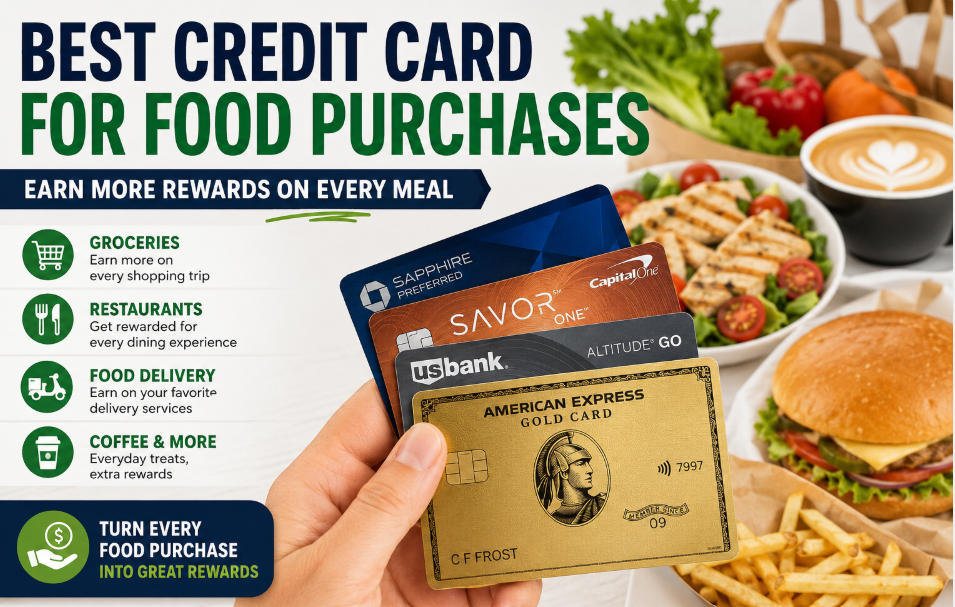
When it comes to everyday spending, few categories rival food purchases. Whether we’re shopping for groceries, dining at restaurants, grabbing coffee on the go, or ordering delivery, food expenses represent a significant portion of most household budgets. That makes choosing the best credit card for food purchases one of the smartest financial decisions we can make.
The right credit card can transform routine spending into valuable rewards, helping us earn cash back, travel points, statement credits, and exclusive dining benefits. Instead of using a generic card that earns minimal rewards, we can maximize every dollar spent on food by selecting a card specifically designed for dining and grocery purchases.
In this guide, we’ll examine the best U.S. credit cards for food purchases, compare their strengths, and help determine which card fits different spending habits.
Why Food Purchases Are the Perfect Rewards Category
Food spending happens consistently throughout the year. Unlike vacations, electronics, or major household purchases, groceries and restaurant visits occur weekly.
This consistency creates an ideal opportunity for rewards accumulation.
Common food-related spending includes:
- Grocery stores
- Supermarkets
- Restaurants
- Fast-food chains
- Coffee shops
- Food delivery services
- Meal kit subscriptions
Because these expenses are unavoidable, earning rewards on them feels like getting paid for spending money we would spend anyway.
What Makes the Best Credit Card for Food Purchases?
Before looking at specific cards, we should understand what separates average cards from exceptional food rewards cards.
High Rewards Rates
The best food cards typically offer:
- 3% to 6% cash back
- 3x to 5x points per dollar
- Bonus categories for groceries and dining
Flexible Redemption Options
Valuable rewards should be redeemable for:
- Cash back
- Travel
- Statement credits
- Gift cards
Food-Related Perks
Some premium cards include:
- Dining credits
- Delivery service memberships
- Grocery statement credits
- Restaurant partnerships
Reasonable Annual Fees
A higher annual fee can be worthwhile if rewards and benefits exceed the cost.
American Express® Gold Card: Best Overall for Food Purchases
Among food-focused credit cards, the American Express Gold Card consistently stands out as one of the strongest options available.
Why It Excels
The card offers:
- 4X Membership Rewards points at restaurants
- 4X Membership Rewards points at U.S. supermarkets (up to annual limits)
- Dining statement credits
- Flexible travel transfer partners
For households that spend heavily on both groceries and restaurants, the earning potential is exceptional.
Who Should Choose It?
This card is ideal for:
- Food enthusiasts
- Families with large grocery budgets
- Frequent restaurant visitors
- Travelers who value transferable points
If food spending dominates our monthly budget, the American Express Gold Card is often the benchmark against which other cards are measured.
Capital One Savor Rewards: Best for Dining Enthusiasts
The Capital One Savor card has earned a reputation as one of the strongest restaurant rewards cards in the United States.
Key Advantages
Benefits include:
- Elevated rewards on dining
- Rewards on entertainment spending
- Strong food delivery earning opportunities
- No foreign transaction fees
For consumers who frequently eat out, the Savor card can generate substantial annual rewards.
Ideal User Profile
Best suited for:
- Restaurant lovers
- Frequent travelers
- Urban professionals
- Food delivery users
Its dining-focused structure makes it particularly attractive for people who spend more at restaurants than grocery stores.
Chase Sapphire Preferred® Card: Best Travel Rewards Option
Not everyone wants straightforward cash back. Many consumers prefer rewards that can be converted into travel experiences.
That’s where the Chase Sapphire Preferred shines.
Food Rewards Benefits
The card offers:
- Strong dining rewards
- Travel redemption flexibility
- Access to Chase Ultimate Rewards
- Valuable transfer partners
Why Travelers Love It
Points can often provide greater value when redeemed through travel partners rather than cash back.
For individuals who enjoy vacations, flights, and hotel stays, food purchases can help fund future adventures.
U.S. Bank Altitude® Go Visa Signature® Card: Best No-Annual-Fee Dining Card
Consumers seeking restaurant rewards without paying an annual fee should consider the U.S. Bank Altitude Go card.
Standout Features
The card provides:
- Competitive dining rewards
- No annual fee
- Straightforward earning structure
- Easy redemption options
Perfect For
- Budget-conscious users
- First-time rewards card holders
- Casual diners
It delivers excellent value while keeping costs low.
Capital One SavorOne Rewards: Best No-Fee Food Card
For consumers who prefer simplicity, the Capital One SavorOne offers impressive value.
Benefits Include
- Rewards on dining
- Rewards on grocery purchases
- Entertainment rewards
- No annual fee
This balance makes it one of the most versatile food-focused cards available.
Best For
- Young professionals
- Families
- Everyday spenders
The card’s combination of food and entertainment rewards creates broad appeal.
Comparing the Top Food Credit Cards
| Card | Best For | Annual Fee | Food Categories |
|---|---|---|---|
| American Express Gold | Groceries + Dining | Premium | Restaurants, Supermarkets |
| Capital One Savor | Restaurants | Moderate | Dining, Entertainment |
| Chase Sapphire Preferred | Travel Rewards | Moderate | Dining, Travel |
| U.S. Bank Altitude Go | Dining Cashback | None | Restaurants |
| Capital One SavorOne | Overall Value | None | Dining, Groceries |
Each card excels in different situations.
Best Card for Grocery Store Purchases
For consumers who spend heavily at supermarkets, the American Express Gold Card remains one of the strongest choices available.
Why Grocery Rewards Matter
Consider a household spending:
- $800 monthly on groceries
- $9,600 annually
Even a modest increase in reward rates can generate hundreds of dollars in additional value each year.
Best Card for Restaurant Spending
Restaurant spending often earns higher reward rates than grocery purchases.
The strongest restaurant-focused options include:
- American Express Gold Card
- Capital One Savor
- Chase Sapphire Preferred
- U.S. Bank Altitude Go
Frequent diners can accumulate rewards remarkably quickly.
Best Card for Food Delivery Services
Food delivery has become a major spending category.
Popular services include:
- Uber Eats
- DoorDash
- Grubhub
- Instacart
Many premium cards offer:
- Delivery credits
- Membership benefits
- Elevated reward rates
Consumers who frequently order food should evaluate these benefits carefully.
Cash Back vs Points for Food Purchases
One common question involves choosing between cash back and points.
Cash Back Advantages
- Simple redemption
- Predictable value
- Immediate savings
Points Advantages
- Travel transfers
- Premium redemptions
- Potentially higher value
The better choice depends on personal goals.
Should We Pay an Annual Fee?
Annual fees often discourage applicants, but they shouldn’t.
Instead, we should calculate net value.
Example
Annual Fee: $250
Rewards Earned: $900
Dining Credits: $120
Net Benefit: $770
In situations like this, a premium card easily justifies its fee.
Mistakes to Avoid When Choosing a Food Credit Card
Ignoring Spending Habits
A grocery-focused card won’t maximize rewards for someone who mainly eats at restaurants.
Overlooking Credits
Many consumers forget to use valuable dining benefits.
Carrying a Balance
Interest charges quickly erase reward earnings.
The best strategy is always paying balances in full each month.
How Families Can Earn the Most Rewards
Families often generate the highest food expenses.
Monthly spending might include:
- Groceries: $1,200
- Dining: $300
- Delivery: $100
With optimized reward rates, annual rewards can become substantial.
The Future of Food Rewards Cards
The industry continues evolving.
Emerging trends include:
Personalized Reward Structures
Cards increasingly adapt to spending behavior.
Delivery Partnerships
Expect additional partnerships with food delivery platforms.
Subscription Credits
Meal kits and grocery memberships may receive greater attention in future rewards programs.
How to Choose the Right Food Credit Card
The ideal card depends on:
- Grocery spending
- Restaurant spending
- Delivery service usage
- Travel goals
- Fee tolerance
- Redemption preferences
The best card is not necessarily the one with the highest reward rate—it is the one that aligns most closely with our spending habits.
Conclusion
Finding the best credit card for food purchases can dramatically increase the value of everyday spending. Among the top options available in the United States, the American Express Gold Card stands out for its combination of grocery and dining rewards. The Capital One Savor excels for restaurant enthusiasts, while the Chase Sapphire Preferred remains a favorite among travelers. Consumers seeking no-annual-fee alternatives should consider the U.S. Bank Altitude Go or Capital One SavorOne.
By matching our spending habits to the right rewards structure, every grocery run, restaurant meal, and food delivery order becomes an opportunity to earn meaningful value.
Frequently Asked Questions
1. What is the best overall credit card for food purchases?
The American Express Gold Card is often considered the strongest overall option because it rewards both dining and grocery spending.
2. Which credit card gives the best restaurant rewards?
The American Express Gold Card and Capital One Savor are among the strongest choices for restaurant spending.
3. Is a no-annual-fee food rewards card worth it?
Yes. Cards like Capital One SavorOne and U.S. Bank Altitude Go provide excellent rewards without annual fees.
4. Should I choose cash back or travel points?
Choose cash back for simplicity and travel points if you frequently redeem rewards for flights and hotels.
5. Can food delivery services earn bonus rewards?
Many premium rewards cards offer bonus points, credits, or memberships for food delivery services.