
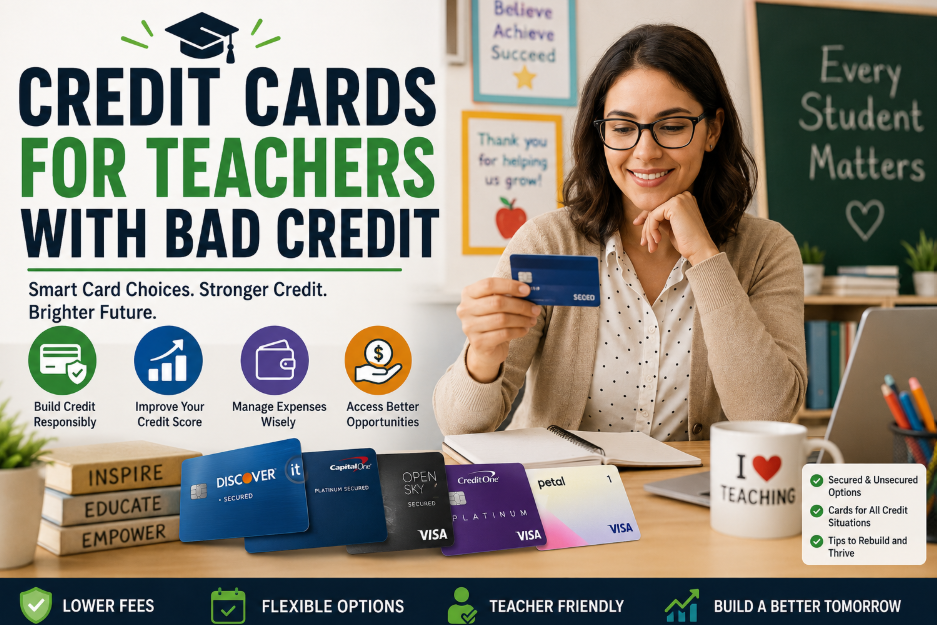
Teaching is one of the most rewarding professions in the world. Every day, educators shape minds, inspire futures, and create opportunities for the next generation. Yet many teachers face financial challenges that are rarely discussed. Student loans, classroom expenses paid out of pocket, rising living costs, and unexpected emergencies can sometimes lead to credit difficulties.
If your credit score isn’t where you’d like it to be, don’t worry. You’re far from alone. The good news is that there are credit cards specifically designed to help people rebuild credit while enjoying useful benefits. In this guide, we’ll explore the best credit card options for teachers with bad credit, how they work, and how we can use them strategically to improve financial health.
Why Teachers Often Struggle With Credit Challenges
Financial stress can affect anyone, regardless of profession. Teachers frequently encounter unique financial hurdles.
Student Loan Debt
Many educators begin their careers carrying significant student loan balances. Monthly payments can place pressure on household budgets, especially during the early years of teaching.
Out-of-Pocket Classroom Spending
Teachers regularly spend their own money on classroom supplies, decorations, educational tools, and student resources. While these purchases help students succeed, they can impact personal finances.
Modest Starting Salaries
Although teaching is invaluable, starting salaries may not always align with the cost of living in certain regions. This financial gap can contribute to credit utilization issues or delayed payments.
Unexpected Emergencies
Life rarely follows a lesson plan. Medical bills, vehicle repairs, or family emergencies can create financial setbacks that negatively affect credit scores.
Understanding Bad Credit Before Applying
Before choosing a credit card, it’s important to understand what lenders typically consider bad credit.
Common Credit Score Ranges
| Credit Range | Score |
|---|---|
| Excellent | 800-850 |
| Very Good | 740-799 |
| Good | 670-739 |
| Fair | 580-669 |
| Poor | Below 580 |
Many teachers seeking credit rebuilding cards fall within the fair or poor credit categories.
How Credit Cards Can Help Rebuild Credit
A credit card can act like a financial training ground. When used responsibly, it helps demonstrate reliability to lenders.
Payment History Matters Most
Payment history typically carries the greatest weight in credit scoring models. Consistently paying on time can gradually improve your score.
Credit Utilization Counts
Keeping balances low compared to your credit limit signals responsible borrowing habits.
Account Age Builds Trust
The longer an account remains open and in good standing, the stronger your credit profile can become.
Features Teachers Should Look For
Not all credit cards for bad credit are created equal.
Credit Bureau Reporting
Choose cards that report activity to all three major credit bureaus.
Low Fees
Some rebuilding cards charge excessive annual or monthly fees. We should aim to minimize unnecessary costs.
Potential Upgrade Opportunities
The best cards offer pathways toward better products as credit improves.
Security Deposit Flexibility
If selecting a secured card, look for manageable deposit requirements.
Secured Credit Cards: The Most Reliable Starting Point
Secured credit cards often provide the easiest path for teachers with poor credit.
How Secured Cards Work
We provide a refundable security deposit, which usually becomes the credit limit.
For example:
- $200 deposit = $200 credit limit
- $500 deposit = $500 credit limit
- $1,000 deposit = $1,000 credit limit
Because the issuer faces less risk, approval is generally easier.
Benefits of Secured Cards
- Easier approval
- Reports to credit bureaus
- Helps establish payment history
- Security deposit may be refundable
Best Secured Credit Cards for Teachers With Bad Credit
Discover it® Secured Credit Card
Many credit experts consider this one of the strongest secured card options available.
Advantages
- Cashback rewards
- Reports to major bureaus
- Potential graduation to unsecured status
- No annual fee
Who It Fits Best
Teachers who want both credit-building opportunities and rewards.
Capital One Platinum Secured Credit Card
This card offers accessibility and simplicity.
Key Benefits
- Relatively low deposit requirements
- Credit-building focus
- Automatic account reviews
Ideal For
Teachers beginning their credit recovery journey.
OpenSky® Secured Visa® Credit Card
Some educators struggle to qualify even for traditional secured cards.
What Makes It Different
- No credit check required
- Credit bureau reporting
- Broad approval standards
Best For
Individuals rebuilding after significant credit challenges.
Unsecured Credit Cards for Teachers With Bad Credit
Not everyone wants to provide a security deposit.
Can Approval Happen Without a Deposit?
Yes, although approval standards tend to be stricter.
Potential Trade-Offs
Unsecured bad-credit cards often include:
- Higher interest rates
- Annual fees
- Lower initial limits
Despite these drawbacks, they can still help improve credit when managed carefully.
Best Unsecured Cards for Credit Rebuilding
Credit One Bank Platinum Visa
This card is frequently available to consumers with limited or damaged credit histories.
Potential Benefits
- Credit bureau reporting
- Cashback opportunities
- Online account management
Mission Lane Visa Credit Card
Mission Lane has gained popularity among individuals rebuilding credit.
Advantages
- Transparent fee structure
- Prequalification options
- Credit-building focus
Petal® 1 Visa Credit Card
Petal uses alternative financial data in some evaluations.
Why Teachers Like It
- No security deposit
- Modern mobile tools
- Opportunity for credit growth
Should Teachers Use Student Loan Forgiveness Savings for Credit Repair?
Many educators participate in forgiveness programs or repayment assistance initiatives.
A Smart Strategy
Instead of increasing spending, consider allocating financial relief toward:
- Paying down existing debt
- Reducing credit utilization
- Building emergency savings
This approach can strengthen both financial stability and credit health.
How to Use a Credit Card to Raise Your Credit Score Faster
A credit card can either become a stepping stone or a stumbling block.
Rule #1: Pay On Time Every Month
Imagine your credit score as a garden. Late payments are weeds. Consistent payments are water and sunlight.
Even one late payment can cause significant damage.
Rule #2: Keep Utilization Under 30%
If your limit is $500:
- Ideal balance: under $150
- Better balance: under $50
Lower utilization generally supports stronger credit scores.
Rule #3: Avoid Maxing Out Cards
A maxed-out card sends warning signals to lenders.
Use only what you can comfortably repay.
Rule #4: Monitor Your Credit Regularly
Checking progress helps maintain motivation and identify errors quickly.
Common Mistakes Teachers Should Avoid
Applying for Too Many Cards
Each application may generate a hard inquiry.
Multiple inquiries within a short period can hurt your score.
Ignoring Annual Fees
Some cards appear attractive initially but become expensive over time.
Missing Due Dates
Set:
- Calendar reminders
- Automatic payments
- Banking alerts
These simple tools can prevent costly mistakes.
Closing Old Accounts Too Soon
Long-standing accounts contribute positively to credit history length.
Special Financial Benefits Available to Teachers
Teachers often overlook programs designed specifically for educators.
Educator Discounts
Many companies provide discounts on:
- Technology
- Insurance
- Office supplies
- Travel services
Financial Wellness Programs
Some school districts partner with financial institutions to offer educational resources.
Credit Union Memberships
Educator-focused credit unions frequently provide:
- Better loan rates
- Personalized service
- Credit-building products
How Long Does Credit Repair Take?
Improving credit is more marathon than sprint.
Typical Timeline
1-3 Months
- Payment consistency established
- Utilization improves
3-6 Months
- Noticeable score increases possible
6-12 Months
- Stronger approval odds
- Better financing opportunities
12+ Months
- Significant rebuilding progress often becomes visible
Patience is essential. Small actions repeated consistently create remarkable results.
Creating a Teacher-Friendly Credit Improvement Plan
Month One
- Obtain a credit card designed for rebuilding
- Set up automatic payments
- Create a simple budget
Months Two Through Six
- Maintain low balances
- Avoid unnecessary applications
- Monitor score improvements
Months Six Through Twelve
- Request credit limit reviews
- Explore upgrade opportunities
- Continue positive payment behavior
When to Upgrade to a Better Credit Card
As your score improves, better options become available.
Signs You’re Ready
- Consistent on-time payments
- Higher credit score
- Reduced debt balances
- Improved income stability
An upgraded card may provide:
- Lower interest rates
- Better rewards
- Higher limits
- Additional perks
The Psychological Benefits of Rebuilding Credit
Credit repair isn’t only about numbers.
Reduced Stress
Financial confidence can lower anxiety levels and improve peace of mind.
Greater Flexibility
Improved credit opens doors to:
- Better loans
- Lower insurance premiums
- Easier apartment approvals
Enhanced Financial Freedom
Strong credit creates opportunities rather than limitations.
For teachers who dedicate their lives to helping others succeed, investing in personal financial growth is equally important.
Final Thoughts on Credit Cards for Teachers With Bad Credit
Bad credit does not define your future. It simply reflects a moment in your financial journey. Teachers spend their careers helping students grow through mistakes and challenges. The same principle applies to personal finances.
Whether we choose a secured card, an unsecured rebuilding card, or a credit-union product, the key is consistent and responsible use. Small habits—paying on time, maintaining low balances, and monitoring progress—can transform a weak credit profile into a strong one over time.
Think of credit rebuilding like teaching a difficult subject. Progress may feel slow at first, but persistence creates results. One good decision after another eventually leads to lasting success.
Frequently Asked Questions
1. Can teachers with a credit score below 600 get a credit card?
Yes. Many secured credit cards are designed specifically for applicants with scores below 600.
2. Are secured credit cards safe?
Yes. Reputable secured cards are issued by established financial institutions and help build credit when used responsibly.
3. How much should a teacher spend on a credit-building card?
Ideally, keep balances below 30% of the credit limit, and even lower when possible.
4. Will a secured card automatically improve my credit score?
Not automatically. Improvement depends on on-time payments, low utilization, and responsible account management.
5. How long before I qualify for a better credit card?
Many users see improvement within 6 to 12 months, although results vary based on individual circumstances.