
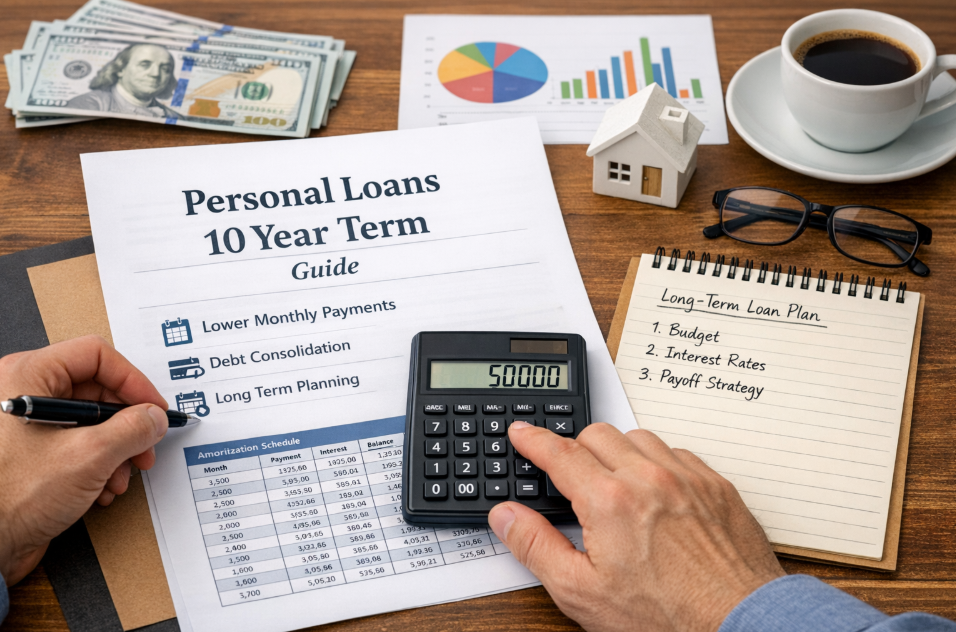
When we think about borrowing money, most of us picture short-term commitments—two, three, maybe five years tops. But what if we stretched that timeline? What if we gave ourselves breathing room, lower monthly payments, and a longer runway to manage our finances?
That’s where personal loans with a 10-year term step into the spotlight.
In this guide, we’ll break everything down—how they work, when they make sense, and whether they’re a smart move or a financial trap in disguise. Think of this as your roadmap before signing on that dotted line.
Understanding Personal Loans with a 10-Year Term
A 10-year personal loan is exactly what it sounds like: a loan that you repay over 120 months. It’s longer than the average personal loan, which usually ranges from 2 to 7 years.
What Makes Them Different?
- Lower monthly payments due to longer repayment
- Higher total interest paid over time
- Larger borrowing potential
- Greater flexibility for big expenses
In simple terms, it’s like choosing between sprinting and jogging. Both get you to the finish line—but one gives you more time to catch your breath.
Why Choose a 10-Year Personal Loan?
Let’s be honest—most of us don’t wake up thinking, “I want to be in debt for 10 years.” But sometimes, it’s the smartest move available.
Key Reasons Borrowers Opt for Longer Terms
- Managing high loan amounts without overwhelming payments
- Covering major life expenses (medical bills, home improvements, debt consolidation)
- Keeping monthly cash flow stable
- Avoiding high-interest credit cards
A Real-Life Perspective
Imagine needing $50,000. A 3-year loan might crush your monthly budget. But stretch it to 10 years? Suddenly, it becomes manageable.
How 10-Year Personal Loans Work
At their core, these loans operate like any other installment loan.
Basic Structure
- Principal: The amount you borrow
- Interest rate: Fixed or variable
- Term: 120 months
- Monthly payments: Equal installments
Fixed vs Variable Rates
Fixed Rate Loans
- Same payment every month
- Easier budgeting
Variable Rate Loans
- Payments can change
- Potentially lower starting rate
Advantages of a 10-Year Loan Term
Let’s talk upside—because yes, there’s plenty.
1. Lower Monthly Payments
This is the biggest draw. Spreading payments over 10 years reduces the monthly burden significantly.
2. Increased Borrowing Capacity
Lenders may approve higher loan amounts because payments are more affordable.
3. Better Cash Flow Management
You’re not suffocating under large monthly obligations—leaving room for savings and emergencies.
4. Debt Consolidation Benefits
Combining multiple debts into one long-term loan can simplify your finances.
The Hidden Downsides You Must Consider
Now, let’s flip the coin.
1. Higher Total Interest
You’ll likely pay much more interest over time. That’s the trade-off.
2. Longer Debt Commitment
Ten years is a long time. Life changes—jobs, income, priorities.
3. Risk of Over-Borrowing
Lower payments can trick us into borrowing more than we need.
Who Should Consider a 10-Year Personal Loan?
This type of loan isn’t for everyone. But for the right person, it’s a powerful tool.
Ideal Candidates
- Individuals with stable income
- Borrowers consolidating high-interest debt
- People financing large, necessary expenses
- Those prioritizing cash flow over speed of repayment
Common Uses for 10-Year Personal Loans
Let’s explore where these loans shine.
1. Debt Consolidation
Combine credit cards into one manageable payment.
2. Home Improvements
Renovations that increase property value often justify longer terms.
3. Medical Expenses
Unexpected healthcare costs can be overwhelming—this helps spread the burden.
4. Major Life Events
Weddings, relocations, or education expenses.
How Interest Impacts Long-Term Loans
Here’s where things get interesting—and a bit sobering.
Example Breakdown
- $30,000 loan
- 6% interest
- 10-year term
You might pay thousands more in interest compared to a 5-year loan.
The Trade-Off Formula
- Lower monthly payment = Higher lifetime cost
- Higher monthly payment = Lower total cost
How to Qualify for a 10-Year Personal Loan
Lenders don’t hand out long-term loans lightly.
Key Requirements
- Good credit score (usually 670+)
- Stable income
- Low debt-to-income ratio
- Strong payment history
Tips to Get Approved Faster
Let’s stack the odds in our favor.
Actionable Steps
- Check and improve your credit score
- Pay down existing debts
- Avoid new credit inquiries
- Provide proof of consistent income
Comparing 10-Year Loans vs Shorter Terms
Let’s put them side by side.
Short-Term Loans (2–5 Years)
- Higher monthly payments
- Lower total interest
- Faster debt freedom
Long-Term Loans (10 Years)
- Lower monthly payments
- Higher total interest
- More financial flexibility
Smart Strategies to Reduce Interest Costs
Even with a 10-year term, we can outsmart interest.
1. Make Extra Payments
Even small additional payments reduce total interest.
2. Refinance Later
If your credit improves, you may secure a better rate.
3. Choose Fixed Rates
Avoid surprises with consistent payments.
Common Mistakes to Avoid
Let’s avoid the classic traps.
Top Pitfalls
- Borrowing more than needed
- Ignoring total repayment cost
- Choosing variable rates without understanding risks
- Skipping the fine print
Are 10-Year Personal Loans Safe?
Yes—but only if used wisely.
Think of it like a powerful tool. In the right hands, it builds something valuable. In the wrong hands, it creates problems.
Alternatives to Consider
Before committing, explore other options.
Possible Alternatives
- Home equity loans
- Balance transfer credit cards
- Shorter-term personal loans
- Borrowing from savings (if possible)
How to Choose the Best Lender
Not all lenders are created equal.
What to Look For
- Competitive interest rates
- No hidden fees
- Flexible repayment options
- Positive customer reviews
Final Thoughts: Is a 10-Year Personal Loan Right for You?
At the end of the day, a 10-year personal loan is a balancing act.
We’re trading time for comfort—lower monthly payments in exchange for higher total costs.
If we’re disciplined, strategic, and realistic about our finances, it can be a smart move. But if we treat it casually, it can quietly drain thousands in extra interest.
So ask yourself:
👉 Do I need lower payments—or do I want to be debt-free sooner?
That answer will guide everything.
FAQs About Personal Loans 10 Year Term
1. Can I pay off a 10-year loan early?
Yes, most lenders allow early repayment. Always check for prepayment penalties.
2. Are interest rates higher for longer terms?
Typically, yes. Longer terms often come with slightly higher rates.
3. What credit score do I need?
Most lenders prefer a score of 670 or higher, but options exist for lower scores.
4. Is a 10-year loan good for debt consolidation?
It can be, especially if it lowers your monthly payments and interest rate.
5. Can I refinance a 10-year personal loan later?
Absolutely. Refinancing can help you secure better terms if your financial situation improves.