
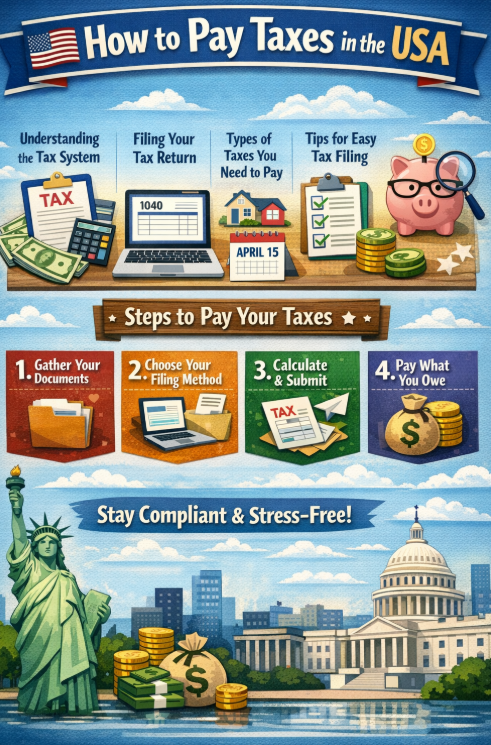
Paying taxes in the United States can feel like navigating a maze without a map. Between federal, state, and sometimes local obligations, the paperwork, deadlines, and rules can make anyone’s head spin. But fear not—we’re here to break it down in a way that’s approachable, thorough, and actionable. By the end of this guide, you’ll have a clear roadmap for handling your taxes confidently, avoiding penalties, and maybe even uncovering opportunities to save money.
Understanding the Basics of US Taxes
Taxes in the United States fund public services like roads, schools, and emergency services. But knowing the types of taxes you may owe is the first step in avoiding stress.
Federal vs. State Taxes
- Federal Taxes: Collected by the IRS (Internal Revenue Service), these include income tax, payroll tax, and capital gains tax.
- State Taxes: Each state has its own system. Some states have no income tax, while others have both income and sales taxes.
Key Tax Deadlines
Most taxpayers need to file by April 15 each year, but this can vary slightly depending on weekends or holidays. Extensions are available, but remember—they extend your filing, not your payment.
Who Needs to File
- Individuals earning above a certain income threshold
- Freelancers and gig workers
- Homeowners with capital gains
- Investors with dividends or interest income
Preparing to File Your Taxes
Preparation is half the battle. Organizing your documents and understanding your financial landscape can save hours of frustration.
Collect Your Documents
- W-2 forms from employers
- 1099 forms for freelance work or investments
- Receipts for deductible expenses
- Bank statements and mortgage documents
Choose Your Filing Method
You can file taxes in the USA using:
- Paper Filing: Traditional but slower and prone to errors
- E-filing: Faster, more accurate, and often allows for direct deposit refunds
- Professional Assistance: CPAs or tax preparers can navigate complex situations
Understanding Taxable Income
Your taxable income determines how much tax you owe. This includes wages, interest, dividends, and other income streams.
Adjustments and Deductions
- Standard Deduction: A flat amount reducing your taxable income
- Itemized Deductions: Expenses like mortgage interest, medical expenses, or charitable donations
- Tax Credits: Dollar-for-dollar reductions in your tax liability (e.g., Child Tax Credit)
Step-by-Step Guide: Paying Your Federal Taxes
Paying taxes might seem like a chore, but breaking it into steps makes it manageable.
Step 1: Determine Your Filing Status
Your filing status affects your tax bracket and eligibility for credits:
- Single
- Married Filing Jointly
- Married Filing Separately
- Head of Household
- Qualifying Widow(er)
Step 2: Calculate Your Tax Liability
- Sum all income streams
- Apply deductions and adjustments
- Use the IRS tax tables to find your base tax
Step 3: Choose a Payment Method
- Electronic Funds Withdrawal: Direct debit when e-filing
- IRS Direct Pay: Secure online payment from your bank
- Credit or Debit Card: Fees may apply
- Check or Money Order: Sent via mail with the payment voucher
Step 4: Submit Your Payment
Double-check account details, payment amount, and tax year before submitting. The IRS confirms payments electronically when done online.
State Tax Payments
State taxes vary widely.
- Check your state’s Department of Revenue website
- Some states allow e-filing; others may require paper submission
- Don’t forget local city or county taxes if applicable
Handling Self-Employment Taxes
If you freelance or own a business, additional considerations apply:
- Self-employment tax covers Social Security and Medicare contributions
- Estimated quarterly payments may be required
- Keep track of business expenses for deductions
Tax Filing Tips for First-Time Filers
Filing taxes for the first time can be intimidating. Here’s what to keep in mind:
- Start Early: Avoid last-minute stress and mistakes
- Organize Receipts: Especially for deductions and credits
- Double-Check Forms: Errors can delay refunds or trigger audits
- Consider Software: Programs like TurboTax or H&R Block guide you step by step
Common Mistakes to Avoid
Even seasoned filers stumble occasionally. Watch out for:
- Missing deadlines or filing extensions incorrectly
- Incorrect Social Security numbers or bank details
- Ignoring deductions or credits
- Forgetting to report all income streams
Electronic vs. Paper Filing: Pros and Cons
Electronic Filing
- Faster processing and refunds
- Fewer errors thanks to automated calculations
- Immediate confirmation of submission
Paper Filing
- Useful for complex situations or amended returns
- Slower processing and refunds
- Higher chance of errors
What to Do If You Can’t Pay
Life happens, and sometimes taxes can’t be paid in full. Options include:
- Installment Agreements: Monthly payments arranged with the IRS
- Offer in Compromise: Negotiated reduced payment under hardship
- Penalty Relief: In some circumstances, penalties may be waived
Tax Software and Tools
Modern tax software simplifies filing:
- TurboTax, H&R Block, and TaxAct for individual returns
- QuickBooks for small business and self-employment tracking
- IRS Free File for eligible low-to-moderate income taxpayers
Keeping Records and Preparing for Audits
The IRS may audit returns to verify accuracy. Protect yourself:
- Keep records for at least 3–7 years
- Include receipts, statements, and correspondence
- Organize documents by category for easy reference
How to Handle Refunds
If you overpay, you’re entitled to a refund:
- Opt for direct deposit for faster processing
- Track your refund via IRS “Where’s My Refund?” tool
- Apply refunds to next year’s taxes if preferred
Understanding Tax Brackets
US tax rates are progressive. Knowing your bracket can help plan your finances:
- Rates range from 10% to 37% federally
- Your marginal rate applies to the last dollar earned
- State taxes are separate and vary by jurisdiction
Planning Ahead for Next Year
Don’t wait until tax season to think about taxes.
- Adjust withholding on your W-4 if you owe too much or get large refunds
- Keep a folder of deductions throughout the year
- Stay updated on new tax laws or credits
Special Considerations
Investments
- Capital gains tax applies to profits from stocks, bonds, or property
- Long-term vs. short-term gains have different rates
Life Changes
- Marriage, divorce, or having children impacts filing status and credits
- Education costs may qualify for deductions or credits
Closing Thoughts
Paying taxes in the USA may seem complex at first glance, but with preparation, organization, and the right tools, it’s manageable. By understanding your obligations, keeping detailed records, and making timely payments, you can navigate tax season with confidence—and maybe even enjoy the satisfaction of a job well done.
FAQs
1. Can I file taxes after April 15?
Yes, you can file for an extension, but payment of any owed taxes is still due by April 15.
2. Do I need to pay state taxes if I live in a no-income-tax state?
No income tax is owed, but check for other local taxes such as sales or property taxes.
3. What if I made a mistake on my tax return?
You can file an amended return using IRS Form 1040-X.
4. How can I avoid underpayment penalties?
Make estimated quarterly payments if you have income not subject to withholding.
5. Is it better to hire a CPA or use tax software?
For simple returns, software suffices. Complex returns, business ownership, or major investments may benefit from a CPA’s expertise.