
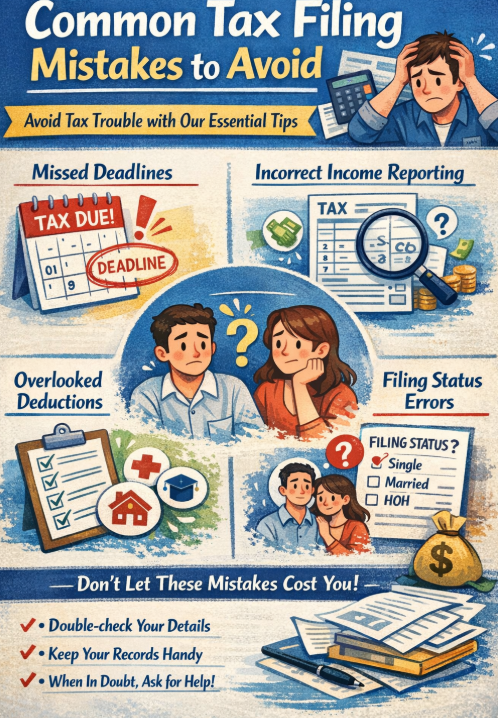
Filing taxes might feel like navigating a maze blindfolded. One small misstep, and suddenly, what should be a routine process turns into an audit nightmare or an unnecessary bill. But fear not—we’re here to walk you through the most common tax filing mistakes, how to avoid them, and tips for making your tax season as smooth as a perfectly balanced spreadsheet.
Why Tax Filing Mistakes Are More Common Than You Think
Even seasoned taxpayers make errors. Life gets busy, tax forms get complex, and the digital tools meant to simplify things sometimes add confusion instead. Knowing the usual pitfalls is the first step toward avoiding them.
Missing or Incorrect Personal Information
One of the simplest yet most frequent mistakes is entering the wrong Social Security number, name spelling, or address. It might seem trivial, but the IRS can delay refunds or even flag your return for review.
Tips to avoid:
- Double-check your Social Security number and your dependents’ numbers.
- Ensure your name matches exactly as it appears on your Social Security card.
- Confirm your current mailing address to avoid lost refunds.
Filing Status Mishaps
Your filing status determines your tax bracket, standard deduction, and eligibility for credits. Choosing the wrong status is a surefire way to pay more than you owe—or underpay, which could trigger penalties.
Common errors include:
- Married couples filing separately when they would benefit from joint filing.
- Claiming “head of household” without meeting the requirements.
Quick tip: Use IRS guidelines or tax software prompts to clarify your status.
Forgetting to Report All Income
Life isn’t always simple, and income can come from multiple sources—wages, freelance gigs, rental properties, investments, and even side hustles. Forgetting even a small source of income can spark an audit.
Checklist to avoid missing income:
- W-2s from all employers.
- 1099 forms for freelance work or dividends.
- Interest from savings accounts or investments.
- Cryptocurrency transactions or online sales.
Overlooking Tax Deductions and Credits
Deductions and credits can reduce your tax liability, but they’re also the areas where mistakes are rife. Many taxpayers leave money on the table simply because they weren’t aware of eligibility.
Examples of commonly missed deductions:
- Student loan interest.
- Charitable donations.
- Medical expenses beyond a certain percentage of income.
- Home office expenses for remote workers.
Pro tip: Keep detailed records throughout the year to maximize your deductions and avoid last-minute scramble.
Math Errors: The Silent Refund Killer
Even with software, human oversight sneaks in. Adding, subtracting, or entering figures incorrectly can delay refunds or trigger IRS notices.
Ways to prevent math errors:
- Use reputable tax software with automatic calculations.
- Double-check manually if you prefer paper filing.
- Review all totals before submitting.
Misreporting Dependents
Claiming the wrong number of dependents—or mistakenly claiming someone ineligible—can backfire.
Tips:
- Only claim children or relatives who meet IRS rules.
- Avoid claiming dependents claimed by someone else.
- Keep proof of residency, relationship, and financial support.
Filing Late or Not at All
Missing the deadline is a common, costly mistake. Late filing penalties and interest can add up quickly.
Strategies to stay on track:
- Mark your calendar for April 15th (or the next business day if it falls on a weekend).
- File for an extension if necessary—but remember, extension is to file, not to pay.
Ignoring Estimated Taxes
Self-employed taxpayers or those with variable income often neglect quarterly estimated taxes. This can lead to large balances due at year-end.
Quick tips:
- Track your earnings throughout the year.
- Use IRS Form 1040-ES to calculate and submit payments.
Incorrect Bank Account Information
Direct deposit is convenient, but a wrong account number can redirect your refund into someone else’s bank—or delay it entirely.
Prevention:
- Double-check routing and account numbers.
- Consider printing a hard copy of your return for reference.
Overlooking State or Local Tax Requirements
Federal taxes are only part of the puzzle. Each state (and some cities) have different filing requirements. Ignoring them can result in penalties.
Best practice:
- Research your state’s tax laws early.
- Use state-specific software modules or consult a professional.
Failing to Keep Documentation
Supporting documents—W-2s, 1099s, receipts, and statements—are crucial. Without them, you might not only miss deductions but also struggle if audited.
Record-keeping tips:
- Keep documents for at least three years.
- Organize by category for easy access.
- Use digital scanning tools to back up paper forms.
Misunderstanding Tax Law Changes
Tax laws evolve constantly. Relying on last year’s rules can be a costly mistake.
How to stay updated:
- Check the IRS website annually.
- Subscribe to trusted financial newsletters.
- Update tax software to the latest version.
Neglecting to Sign and Date
It’s surprisingly common—especially with paper forms—to forget your signature. Unsigned returns are considered incomplete.
Fix:
- Review every page before submission.
- Sign electronically if using software.
- Ensure all spouses sign joint returns.
Overclaiming Deductions
Being overly aggressive in deductions can backfire. For example, inflating charitable donations or business expenses may trigger IRS scrutiny.
Best approach:
- Be realistic and maintain documentation.
- Only claim legitimate expenses.
Not Reviewing the Return
Submitting without review is like sending a text without spellcheck—you might regret it.
Steps to review:
- Read line by line.
- Check math and personal information.
- Verify credits and deductions.
Tips to Avoid Tax Filing Mistakes
- Start Early: Don’t wait until the last minute.
- Organize Documents: Keep W-2s, 1099s, receipts, and statements in one folder.
- Use Software or Professionals: Tax software reduces errors; professionals can handle complex situations.
- Double-Check Everything: Personal info, math, and deductions.
- Stay Informed: Update yourself on law changes annually.
When to Seek Professional Help
Sometimes, DIY tax filing isn’t enough. If your finances include multiple income streams, investments, or business activities, a tax professional can save time and headaches.
Situations warranting professional help:
- Owning a business or freelancing.
- Real estate transactions.
- Significant investments or stock options.
- Complex deductions like education or medical expenses.
The Cost of Tax Filing Mistakes
Errors can result in:
- Delayed refunds.
- Penalties and interest.
- IRS audits.
- Increased stress and paperwork.
Taking time to avoid mistakes can save you both money and peace of mind.
Final Thoughts: Be Proactive, Not Reactive
Tax filing doesn’t have to feel like a chore from which you hide under the covers. By understanding common mistakes and being proactive, you can file accurately and confidently. Think of taxes like maintaining a car: a little upkeep prevents major breakdowns. Keep your records organized, double-check your info, and don’t hesitate to consult experts when necessary.
FAQs About Common Tax Filing Mistakes
Q1: What’s the most common tax filing mistake?
A: Missing or incorrect personal information and failing to report all income are top errors.
Q2: Can math errors really delay my refund?
A: Absolutely. Even minor addition or subtraction mistakes can trigger IRS reviews.
Q3: Are deductions or credits more frequently misreported?
A: Credits are often misclaimed due to misunderstanding eligibility, while deductions are missed altogether.
Q4: How long should I keep my tax records?
A: At least three years, though some documents related to property or investments may need up to seven years.
Q5: When should I hire a professional?
A: When your finances are complex, involve multiple income streams, or you want assurance of accuracy and maximum tax benefits.