
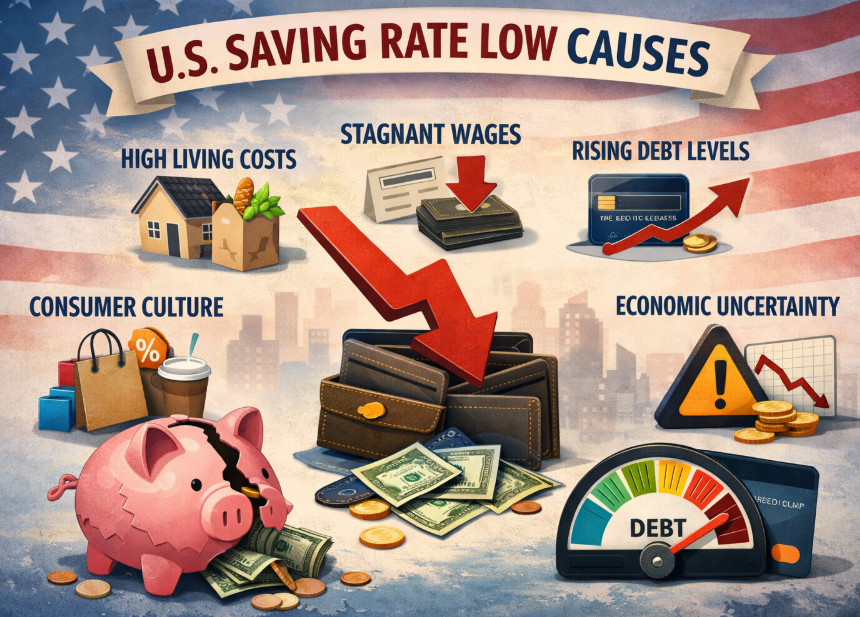
Understanding why Americans save less than expected is like peering into a complex mosaic of habits, policies, and psychology. At first glance, it might seem simple: spend more than you earn, right? But when we peel back the layers, a mix of culture, economic pressures, and financial systems emerges, explaining why the US saving rate lingers at historic lows.
The Current State of US Savings
Before diving into the why, let’s set the stage with the numbers. The personal saving rate in the United States hovers around 3–5% of disposable income in recent years—far below the 10–15% recommended by financial experts. To put it plainly, many Americans are just scraping by, with little room for long-term wealth accumulation.
Historical Perspective: Savings Then and Now
A Look Back at the 20th Century
In the mid-20th century, American households saved significantly more. Post-World War II, the saving rate often exceeded 10%, influenced by economic optimism, fewer consumer credit options, and a culture that emphasized frugality.
The Shift Towards Consumption
Fast-forward to the 21st century: easy credit, booming consumer culture, and changing lifestyle expectations have all nudged Americans toward spending rather than saving.
Cultural Factors Driving Low Savings
The American Consumer Mindset
We are wired to want more. From the latest smartphone to luxury vacations, consumer culture thrives on immediate gratification. Saving feels slow and tedious, while spending promises instant rewards.
The Influence of Social Media
Platforms like Instagram and TikTok amplify lifestyle envy. Seeing peers flaunt new gadgets or experiences creates subtle pressure to spend, leaving little room for saving.
Economic Pressures Impacting Savings
Wage Stagnation vs. Cost of Living
Despite rising productivity, wage growth for many has remained sluggish. Meanwhile, housing, healthcare, and education costs have skyrocketed, squeezing disposable income.
Rising Debt Levels
- Credit cards
- Student loans
- Auto loans
Debt forces households to divert money from savings toward servicing interest payments.
Inflation’s Sneaky Erosion
Even when Americans attempt to save, inflation quietly diminishes purchasing power, making saving feel like a losing battle.
Behavioral Economics: Why We Don’t Save
Hyperbolic Discounting
Humans often prioritize immediate rewards over long-term gains. Choosing a night out over adding $100 to a savings account is a classic example.
Lack of Financial Literacy
Many Americans lack knowledge of compound interest, retirement planning, or emergency funds, which reduces motivation to save.
Psychological Anchors
We compare ourselves to peers, societal norms, and past financial behaviors. This anchoring often leads to overspending and under-saving.
Policy and Structural Contributors
Tax Incentives and Retirement Systems
While tax-advantaged retirement accounts exist, they can be complex and inaccessible for some, discouraging broader participation.
Employer Benefits and Social Safety Nets
- Limited employer contribution matches
- Insufficient unemployment safety nets
These structural gaps encourage consumption in the present rather than saving for the future.
The Role of Credit Accessibility
Credit Cards and Instant Loans
The availability of revolving credit provides a safety net that reduces the perceived need for personal savings. It’s easier to borrow than to save, psychologically and practically.
Low Interest Rates
Historically low interest rates reduce the reward for traditional savings accounts, nudging Americans toward spending or investing in riskier assets instead.
Generational Trends in Saving
Millennials and Gen Z
Young Americans are burdened by student debt, housing costs, and job market volatility. Their saving behavior is shaped by necessity, not choice.
Baby Boomers vs. Gen X
Older generations often saved more out of necessity and cultural norms, while middle generations face financial squeeze points that hinder saving.
Technological Disruptions
Fintech and Payment Apps
While apps make saving easier through automation, they also facilitate impulse spending through instant purchases.
Cryptocurrencies and Investment Hype
The lure of high-risk investments can draw funds away from conventional savings, reducing overall household savings.
The Psychology of Lifestyle Inflation
Keeping Up with the Joneses
As income rises, spending tends to rise at the same rate—or faster—leaving little additional room for saving.
Material Aspirations
Owning bigger houses, newer cars, and luxury goods often trumps the abstract goal of financial security, especially when credit allows immediate gratification.
Solutions and Strategies to Improve Savings
Automate Savings
Set up automatic transfers to savings or retirement accounts. Out of sight, out of mind, but in wealth accumulation.
Budget Mindfully
Track spending to understand where money leaks away. Apps and spreadsheets help visualize trends.
Build an Emergency Fund
Even a small buffer can reduce financial stress and encourage consistent saving habits.
Leverage Employer Benefits
Maximize 401(k) matches or other employer-sponsored savings programs to gain both security and incentives.
Financial Education
Understanding compound interest, investment options, and debt management can transform saving from a chore to an empowering habit.
Broader Implications of Low Savings
Economic Vulnerability
Low household savings amplify vulnerability to economic shocks, such as job loss or medical emergencies, leading to greater reliance on credit or government support.
Retirement Insecurity
Without sufficient savings, many Americans risk facing inadequate retirement income, potentially increasing dependence on Social Security or family support.
Societal and Cultural Costs
Low savings rates can exacerbate wealth inequality, reduce upward mobility, and contribute to long-term financial stress across communities.
Global Comparison: Where the US Stands
- Germany: Cultural frugality and stronger social safety nets contribute to a higher saving rate (~10%).
- Japan: Historically high saving rate, though declining due to aging population (~7–8%).
- US: Relatively low at ~3–5%, highlighting cultural, economic, and systemic differences.
The Future of Saving in America
Changing Attitudes
Awareness of financial literacy, micro-saving apps, and investment tools may gradually shift behaviors toward higher savings.
Policy Interventions
Tax incentives, stronger safety nets, and educational programs can encourage saving at both household and societal levels.
Cultural Shift
If we begin valuing financial security as much as material possessions, the next generation could save more effectively.
Key Takeaways
- Cultural emphasis on consumption and instant gratification dominates saving tendencies.
- Economic pressures like stagnant wages, debt, and rising living costs squeeze disposable income.
- Behavioral and psychological factors, including lack of financial literacy and lifestyle inflation, play a huge role.
- Structural and policy limitations, combined with easy access to credit, discourage habitual saving.
- Solutions involve a mix of personal discipline, technological tools, and broader systemic changes.
Conclusion: Why the US Saving Rate Remains Low
In the grand mosaic of American finances, low saving rates are not a simple reflection of laziness or ignorance—they are the product of intertwined cultural, economic, behavioral, and structural forces. By understanding these dynamics, we can chart a path toward healthier financial habits, both individually and collectively. Saving may never be thrilling, but with the right mindset and tools, it can become empowering—a quiet revolution for long-term security.
Frequently Asked Questions (FAQs)
1. Why does the US have a lower saving rate than other countries?
Cultural emphasis on consumption, easy access to credit, and insufficient financial literacy contribute significantly.
2. How does debt affect US saving rates?
High levels of student loans, credit card balances, and mortgages divert funds from potential savings.
3. Can technology help increase savings?
Yes, automated savings apps, budgeting tools, and micro-investing platforms can facilitate consistent saving habits.
4. What role do wages play in low saving rates?
Stagnant wages combined with rising living costs leave households with limited disposable income for savings.
5. How can Americans improve their saving habits?
Automate savings, budget effectively, leverage employer benefits, educate themselves on financial literacy, and manage lifestyle inflation.