
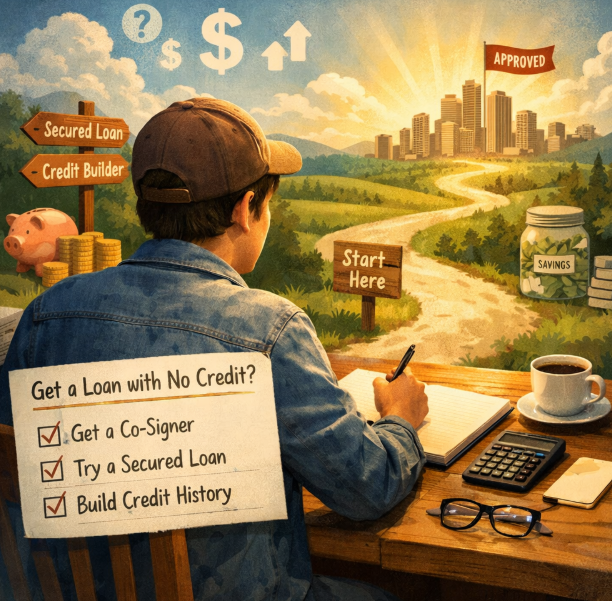
Let’s be honest—stepping into the world of credit with absolutely no history can feel like trying to enter a party where you’re not on the guest list. Lenders don’t know you, you don’t have a score, and everything seems stacked against you.
But here’s the truth we don’t hear enough: yes, you can get a loan with no credit history. It’s not always easy, and it may not look like traditional borrowing—but it’s absolutely possible.
In this guide, we’re going to walk through everything together—like a roadmap for beginners—so you don’t just hope for approval… you actually understand how to get there.
Understanding What “No Credit History” Really Means
Before we jump into solutions, let’s clear something up.
No Credit vs Bad Credit
- No credit: You’ve never borrowed before. You’re a blank slate.
- Bad credit: You’ve borrowed—but missed payments or defaulted.
👉 Believe it or not, lenders often prefer no credit over bad credit. Why? Because you haven’t shown risky behavior—you just haven’t shown anything yet.
Why Lenders Hesitate Without Credit History
Imagine lending money to a stranger with zero track record. Would you feel comfortable?
That’s exactly how lenders think.
Their Concerns
- No evidence you can repay
- No payment behavior history
- No credit score to evaluate risk
So instead of rejecting you outright, many lenders simply tighten requirements.
Can You Still Get a Loan Without Credit? (Short Answer)
Yes—But With Conditions
You can get a loan if you:
- Show income stability
- Provide collateral
- Use a co-signer
- Start with beginner-friendly loan types
Think of it like building trust from scratch—you just need to prove yourself in other ways.
Types of Loans You Can Get With No Credit
Let’s explore your real options.
Personal Loans for No Credit
Some lenders specialize in borrowers with no history.
What They Look For
- Proof of income
- Employment status
- Bank account activity
Pros
- Fast approval
- No collateral needed (sometimes)
Cons
- Higher interest rates
- Lower borrowing limits
Secured Loans: The Safer Entry Point
If lenders don’t trust your history, they’ll trust your assets.
Examples
- Car title loans
- Savings-backed loans
- Secured personal loans
How It Works
You provide something valuable as collateral.
If you don’t pay, they take the asset.
Why It Works
It reduces risk for lenders—making approval much easier.
Credit Builder Loans (Hidden Gem)
These are specifically designed for people like you.
How They Work
- You don’t get money upfront
- You make monthly payments
- The lender reports your payments
- You receive the money at the end
👉 It’s like saving… but with a credit score bonus.
Payday Loans (Use With Caution)
Yes, they’re easy to get—but they come with serious downsides.
Pros
- No credit required
- Instant approval
Cons
- Extremely high interest rates
- Short repayment periods
- Risk of debt cycles
👉 Think of payday loans as a last resort, not a first step.
Using a Co-Signer: A Powerful Shortcut
This is one of the smartest ways to get approved.
What Is a Co-Signer?
Someone with good credit who agrees to repay the loan if you don’t.
Why It Helps
- Reduces lender risk
- Increases approval chances
- Lowers interest rates
But Be Careful
If you miss payments, you hurt their credit too.
It’s not just a financial decision—it’s a relationship decision.
How to Improve Your Chances of Getting Approved
Let’s get strategic.
1. Show Stable Income
Lenders love consistency.
- Full-time job? ✔️
- Regular freelance income? ✔️
- Government benefits? ✔️
👉 The more stable your income, the safer you look.
2. Open a Bank Account
Having an active account shows:
- Financial responsibility
- Cash flow patterns
- Spending behavior
3. Start Small
Don’t aim for a huge loan right away.
Instead:
- Apply for small amounts
- Build repayment history
- Gradually increase limits
4. Avoid Too Many Applications
Every application can hurt your chances.
👉 Apply strategically, not desperately.
Best Alternatives to Traditional Loans
Sometimes, the smartest move is not taking a loan.
Borrowing From Family or Friends
Yes, it’s uncomfortable—but it can be effective.
Tips
- Put everything in writing
- Set clear repayment terms
- Treat it professionally
Employer Advances
Some employers offer:
- Salary advances
- Emergency funds
👉 No credit check needed.
Buy Now, Pay Later (BNPL)
These services:
- Split purchases into installments
- Often don’t require credit history
But remember—missed payments still hurt.
How to Build Credit While Borrowing
This is where things get exciting.
You’re not just getting a loan—you’re building your future.
Step-by-Step Credit Building Strategy
Step 1: Get a Secured Credit Card
- Deposit = credit limit
- Use it for small purchases
Step 2: Pay On Time (Every Time)
This is the most important factor.
Step 3: Keep Utilization Low
Use less than 30% of your limit.
Step 4: Monitor Your Progress
Track your score regularly.
Common Mistakes to Avoid
Let’s save you from costly errors.
Mistake #1: Taking High-Interest Loans Too Quickly
Desperation leads to bad decisions.
Mistake #2: Missing Payments Early
Your first loans matter the most.
Mistake #3: Ignoring Fine Print
Always check:
- Interest rates
- Fees
- Penalties
Mistake #4: Borrowing More Than You Need
Keep it lean. Keep it manageable.
What Lenders Really Want (Behind the Scenes)
Let’s flip the perspective.
Lenders are asking:
- Can this person repay?
- Are they reliable?
- Is this risky?
You Can Answer Without Credit By Showing
- Stable income
- Low expenses
- Responsible behavior
👉 You’re building trust manually.
Real-Life Scenario: Starting From Zero
Imagine this:
You’ve just moved to a new country. No credit. No score.
Here’s a realistic path:
- Open a bank account
- Get a secured credit card
- Use it monthly (small purchases)
- Pay on time for 3–6 months
- Apply for a small personal loan
👉 Suddenly, you’re no longer invisible—you’re credible.
How Long Does It Take to Build Credit?
Patience is key.
Timeline
- 1–3 months: Initial activity
- 3–6 months: First score appears
- 6–12 months: Stronger profile
Think of it like planting a tree—you don’t see growth overnight, but it is happening.
Is It Better to Wait or Apply Now?
Great question.
Apply Now If:
- You have stable income
- You can repay comfortably
Wait If:
- You’re unsure about payments
- You’re relying on risky lenders
👉 Sometimes waiting is the smartest financial move.
Final Thoughts: Yes, You Can—But Play It Smart
Let’s bring it all together.
Having no credit history doesn’t mean you’re stuck—it just means you’re starting at the very beginning.
And honestly? That’s not a bad place to be.
Because you get to build your financial future the right way.
Key Takeaways
- Yes, loans are possible without credit
- Start small and build gradually
- Use tools like secured cards and co-signers
- Avoid high-risk lenders
- Focus on long-term growth
Conclusion: From Invisible to Trustworthy
We’ve all been there—standing at the edge of something new, unsure if we’ll be accepted.
Getting a loan with no credit history is exactly that moment.
But here’s the truth:
You don’t need a past to build a future—you just need a plan.
Take small steps. Stay consistent. Be patient.
And before you know it, lenders won’t be asking “Who are you?”—they’ll be saying “Approved.”
FAQs
1. Can I get a loan with no credit and no job?
It’s very difficult. Most lenders require proof of income. Consider alternatives like co-signers or secured loans.
2. What is the easiest loan to get with no credit?
Secured loans and credit builder loans are usually the easiest to qualify for.
3. Will applying for a loan hurt me if I have no credit?
It can slightly affect your profile, so apply strategically and avoid multiple applications.
4. How much can I borrow with no credit history?
Typically small amounts—$300 to $5,000 depending on the lender and your income.
5. Can I build credit without taking a loan?
Yes—secured credit cards and on-time payments are powerful tools for building credit.