
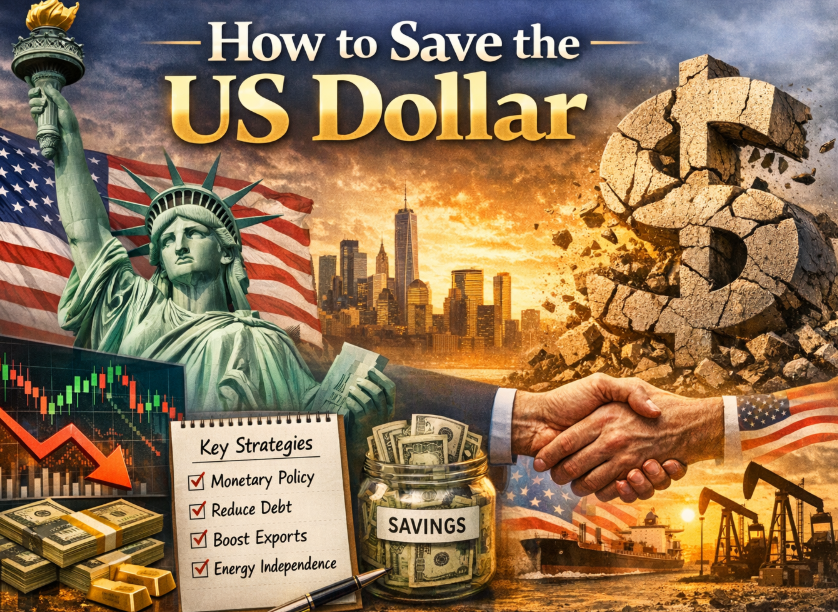
We’ve all felt it — the dollar isn’t as powerful as it once was. Prices rise, savings shrink, and that $20 bill just doesn’t stretch like it used to. But what would it take to save the US dollar? Not in the sci‑fi sense of time travel, but in practical economic reality.
In this guide, we’ll explore what the dollar’s health means, why it matters, and real strategies that could strengthen it — the kind you can understand without a PhD in economics.
Why the Value of the US Dollar Matters
The US dollar is more than paper and ink. It’s a global benchmark — a reserve currency, a trading anchor, and for many nations, a lifeline. When the dollar is strong:
- Imported goods stay cheaper.
- Investors have confidence.
- Financial stability becomes more predictable.
So, saving the dollar means protecting not just the US economy but much of the world’s.
A Quick Story: What Happens When Confidence Wavers
Imagine trust in the dollar as a dam holding back water. Confidence is the concrete. When cracks form — due to debt, inflation, or political gridlock — water starts seeping. The solution? Reinforce that dam before it bursts.
Understanding What’s Dragging Down the Dollar
Before we talk about solutions, we need clarity on the problem.
Inflation — The Silent Erosion
Inflation reduces the value of money. You hold the same bill, but it buys less. That’s similar to having a bucket with tiny holes — steady drip, drip, drip losses over time.
Excessive National Debt
The US national debt is massive. When governments borrow too much, investors begin to question long‑term value — weakening confidence.
Trade Deficits Matter Too
If a country imports far more than it exports, foreign demand for its currency decreases — another downward pull on strength.
How Can We “Save” the Dollar? Practical Paths Forward
This is where theory meets action. Think of this section as the toolbox for rebuilding confidence and strengthening the dollar.
Fiscal Responsibility — The Foundation
Governments should balance spending and revenue, just like families balance budgets.
Strategies to Consider:
- Smart spending — prioritize growth and essential services.
- Tax reform — broaden the base and close loopholes.
- Long‑term planning — avoid always reacting to crisis.
Fiscal discipline isn’t sexy, but it’s trustworthy.
Transparent Monetary Policy
Confidence loves clarity. Central banks should communicate goals clearly and consistently.
- Predictable interest‑rate decisions
- Clear inflation targets
- Honest economic forecasting
Think of this like weather forecasting. People feel safer when they know a storm is days away — not 10 minutes before it hits.
Strengthening Economic Growth
Beyond belt‑tightening, economic expansion fuels a powerful currency.
Invest in Innovation and Workforce Skills
Advancements in tech and education mean higher productivity. A productive economy attracts investment — and investment strengthens currency.
Memories of perceived decline fade when people see rising opportunity.
Encourage Exports, Reduce Deficits
Trade balances matter. For example:
- Support industries that export goods
- Use trade agreements that open markets fairly
- Help small businesses find global customers
Exports bring foreign dollars home — boosting the US currency.
Protecting Confidence Through Global Cooperation
The dollar’s importance isn’t domestically confined — it’s global.
Stable Alliances Build Stable Currencies
Diplomacy and economic partnerships matter. Trust between nations can make currencies more dependable.
Think of foreign relations like personal friendships — healthy communication builds trust.
Reserve Currency Status Requires Maintenance
Countries around the world hold dollars in their reserves. Maintaining that trust requires:
- Clear policy
- Credible institutions
- Steady economic performance
It’s like being the go‑to friend — you need to prove reliability consistently.
Public Perception — Why It Matters More Than You Think
Economics isn’t just numbers — it’s psychology too.
Confidence Creates Reality
If people believe the dollar is strong, that belief fuels investment, spending, and saving behaviors that actually make it strong.
It’s a self‑fulfilling prophecy — one we need to feed with facts and stable governance.
What Happens If We Don’t Act? The Risk Landscape
Let’s be real without paranoia: failing to act means continued erosion.
- Rising cost of imports
- Higher foreign borrowing costs
- Less influence in global markets
Not dramatic collapse — but persistent weakness that makes everyday life harder.
Putting It All Together — A Balanced Roadmap
Here’s a simple list to keep in mind:
- Improve fiscal responsibility
- Maintain transparent monetary policy
- Invest in innovation and workforce development
- Encourage fair trade and export growth
- Strengthen international economic cooperation
- Build public trust through consistent governance
These six pillars support long‑term strength, like posts holding up a bridge.
What You Can Do (Even as an Individual)
You may not control national policy, but you influence markets:
- Be financially literate
- Support sustainable economic policies
- Invest wisely
- Save consistently
Collective public behavior shapes confidence as much as political decisions.
A Closing Thought — Saving a Currency is About Trust
Saving the US dollar isn’t about magic formulas or quick fixes. Just like tending a garden, it takes consistent care, thoughtful choices, and patience. The stronger our economic habits — both individual and collective — the healthier the dollar becomes.
In the end, we are all stakeholders in this story, and the steps we take today ripple into tomorrow.
Frequently Asked Questions (FAQs)
1. What does it mean to “save the US dollar”?
Saving the dollar means strengthening its value and the confidence people have in it — domestically and globally.
2. Can government policies really help the dollar?
Yes — responsible fiscal and monetary policies boost trust, encourage investment, and maintain stability.
3. Does inflation affect the dollar’s strength?
Absolutely. High inflation weakens buying power, which can reduce confidence in a currency.
4. Is trade important for the dollar’s future?
Yes. Balanced trade encourages demand for the dollar and supports long‑term strength.
5. How can individuals help?
By being financially literate, supporting policies that promote stability, and practicing responsible financial habits.