
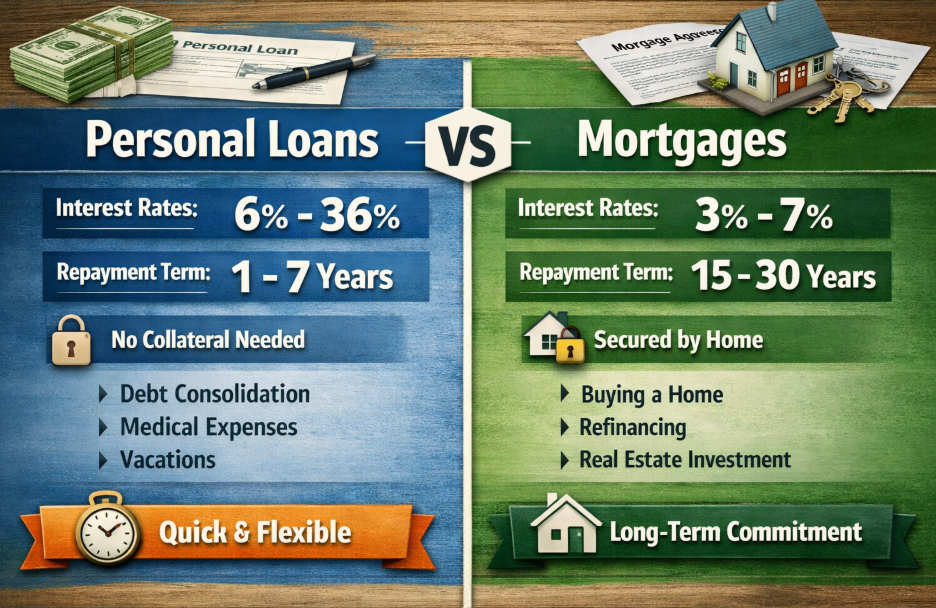
When it comes to borrowing money, we often find ourselves standing at a crossroads. On one side, we have personal loans—quick, flexible, and often unsecured. On the other, mortgages—structured, long-term, and tied to property. So, which one is right for us?
Let’s unpack this together. Think of personal loans as a sprint and mortgages as a marathon. Both get you to a financial destination—but the journey, pace, and risks couldn’t be more different.
Understanding the Basics of Borrowing
Before diving into comparisons, we need to understand what each option actually is.
What Is a Personal Loan?
A personal loan is a type of unsecured (sometimes secured) borrowing that we can use for almost anything—medical bills, travel, debt consolidation, or even emergencies.
- Typically ranges from $1,000 to $50,000+
- Short repayment periods (1–7 years)
- Higher interest rates compared to mortgages
- Minimal restrictions on usage
It’s like a financial Swiss army knife—versatile and ready when needed.
What Is a Mortgage?
A mortgage is a secured loan specifically used to purchase or refinance real estate.
- Large loan amounts (often $100,000+)
- Long repayment terms (15–30 years)
- Lower interest rates
- Backed by property as collateral
In simple terms, it’s a long-term commitment tied to your home.
Personal Loans vs Mortgages: The Core Differences
Let’s break down the key differences side by side.
Loan Purpose
- Personal Loans: Flexible use
- Mortgages: Strictly for property
Collateral
- Personal Loans: Usually unsecured
- Mortgages: Secured by the home
Loan Amount
- Personal Loans: Smaller
- Mortgages: Significantly larger
Interest Rates
- Personal Loans: Higher
- Mortgages: Lower
Repayment Terms
- Personal Loans: Short-term
- Mortgages: Long-term
Why Would We Choose a Personal Loan?
Personal loans shine when we need speed and flexibility.
Quick Access to Funds
Sometimes life doesn’t wait. Personal loans can be approved within days—or even hours.
No Collateral Required
We don’t have to risk losing a home or asset.
Flexible Spending
We can use the funds for:
- Medical emergencies
- Travel
- Weddings
- Debt consolidation
Simple Application Process
Less paperwork compared to mortgages.
When Does a Mortgage Make More Sense?
Mortgages are designed for big financial moves—mainly buying property.
Lower Interest Rates
Because they’re secured, lenders offer better rates.
Long-Term Repayment
Monthly payments are more manageable due to extended terms.
Building Equity
Every payment moves us closer to owning an asset.
Interest Rates: The Silent Game-Changer
Interest rates are where things get real.
Personal Loan Rates
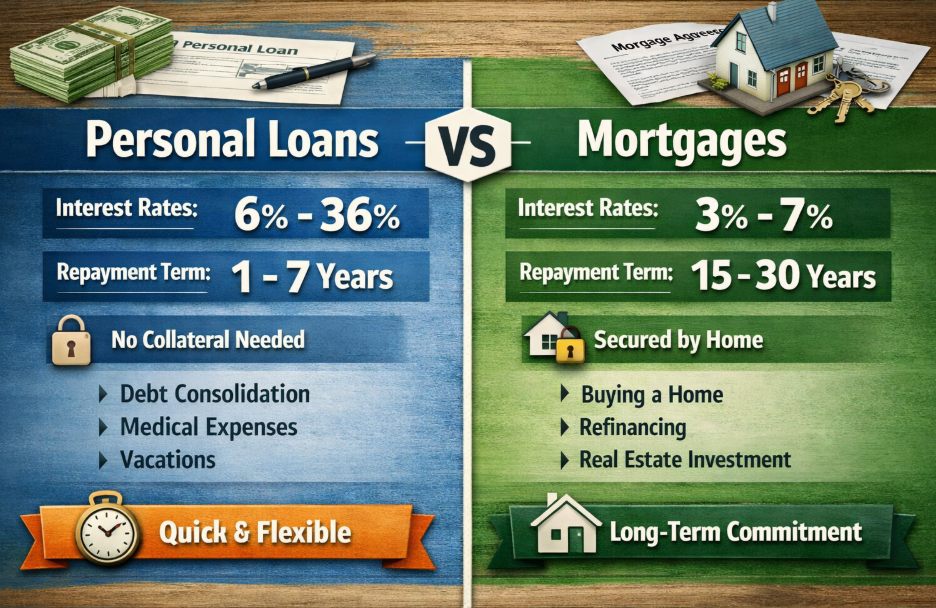
- Typically range from 6% to 36%
- Based heavily on credit score
Mortgage Rates
- Usually much lower (e.g., 3%–7%)
- Influenced by market conditions and loan type
Even a small difference in rates can mean thousands over time.
Risk Levels: What’s at Stake?
Personal Loans
- No asset risk (if unsecured)
- But defaulting damages credit
Mortgages
- Risk of foreclosure
- You could lose your home
This is where the emotional weight kicks in. A mortgage isn’t just financial—it’s personal.
Approval Process: Fast vs Thorough
Personal Loan Approval
- Quick credit check
- Minimal documentation
- Fast funding
Mortgage Approval
- Income verification
- Credit history review
- Property appraisal
- Lengthy underwriting process
Mortgages are like a deep background check. Personal loans? More like a quick handshake.
Flexibility vs Structure
Personal Loans Offer Freedom
We decide how to spend the money. No questions asked.
Mortgages Demand Structure
Funds are locked into real estate.
Repayment Terms: Sprint vs Marathon
Personal Loans
- Shorter terms
- Higher monthly payments
Mortgages
- Longer terms
- Lower monthly payments
It’s the difference between ripping off a band-aid and slowly easing into repayment.
Impact on Credit Score
Both loans affect our credit—but differently.
Personal Loans
- Can boost credit if paid on time
- High interest may lead to missed payments
Mortgages
- Strong positive impact over time
- Large debt affects credit utilization
Fees and Hidden Costs
Personal Loans
- Origination fees
- Late payment penalties
Mortgages
- Closing costs
- Appraisal fees
- Insurance and taxes
Mortgages often come with a long list of upfront expenses.
Use Cases: When Each Loan Wins
Best Uses for Personal Loans
- Emergency expenses
- Consolidating high-interest debt
- Short-term financial needs
Best Uses for Mortgages
- Buying a home
- Refinancing property
- Real estate investment
Pros and Cons Breakdown
Personal Loans
Pros:
- Fast approval
- No collateral needed
- Flexible usage
Cons:
- Higher interest rates
- Lower borrowing limits
- Short repayment periods
Mortgages
Pros:
- Lower interest rates
- High loan amounts
- Long repayment terms
Cons:
- Risk of foreclosure
- Complex application process
- Limited use
Choosing the Right Option: A Practical Approach
So how do we decide?
Ask Ourselves These Questions
- What do we need the money for?
- How quickly do we need it?
- Can we handle long-term debt?
- Are we comfortable putting up collateral?
Scenario-Based Decisions
Scenario 1: Emergency Expense
Go with a personal loan—speed matters.
Scenario 2: Buying a House
Mortgage is the only logical option.
Scenario 3: Debt Consolidation
Personal loan works well for combining debts.
Psychological Factors in Borrowing
Let’s be real—money decisions aren’t just logical.
- Personal loans feel less “heavy”
- Mortgages feel like a life milestone
The emotional weight of a mortgage can influence how we perceive risk and commitment.
Long-Term Financial Strategy
Personal Loans as Tools
They help us solve immediate problems.
Mortgages as Investments
They build wealth over time.
Common Mistakes to Avoid
- Taking a personal loan for long-term needs
- Underestimating mortgage costs
- Ignoring interest rates
- Overborrowing
Closing Thoughts: Sprint or Marathon?
At the end of the day, personal loans and mortgages serve completely different purposes.
- Personal loans are fast, flexible, and short-term
- Mortgages are structured, long-term, and asset-based
Choosing between them isn’t about which is better—it’s about which fits our current financial story.
Are we solving a quick problem or building a future?
That’s the real question.
FAQs
1. Can we use a personal loan to buy a house?
Technically yes, but it’s not practical due to low limits and high interest rates.
2. Which is easier to get approved for?
Personal loans are generally easier and faster to obtain.
3. Do mortgages always have lower interest rates?
Yes, because they are secured by property.
4. Can we pay off a mortgage early?
Yes, but some lenders may charge prepayment penalties.
5. Which loan is better for beginners?
It depends—personal loans for small needs, mortgages for long-term investments.